Emotions and Credibility of Asylum Claimants
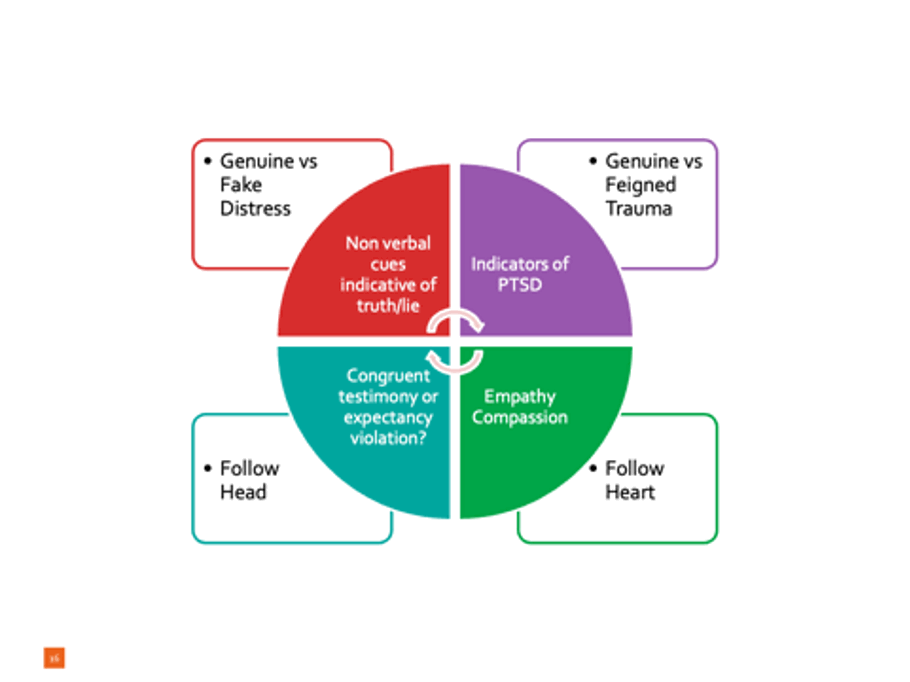
Perceived credibility is of key importance in refugee status decisions (RSD). The emotional demeanour of an asylum seeker, and the decision-maker’s affect, may inform credibility judgements throughout the RSD process. In this research participants played the role of asylum decision-makers and watched a mock interview where an asylum seeker either displayed behaviours indicative of Post-Traumatic Stress Disorder (PTSD) or not indicative of PTSD. Ratings of the asylum seeker’s credibility, the emotions displayed and decision-maker affect were obtained alongside thematic analysis of open-ended responses. We found an emotional congruence effect; credibility ratings were higher when an asylum seeker ‘with PTSD’ showed behaviours indicating fear/distress. A novel finding was an “affect heuristic “driving judgements. Participants’ self-reported feelings of anger, sadness, disgust and compassion were associated with higher credibility ratings of the asylum seeker, whereas self-reporting no emotion was associated with lower ratings.
Bailey, E., Given-Wilson, Z and Memon, A. (2025, in press) Perceived Credibility of Asylum Claimants: The Role of Decision-Maker Affect and Asylum Seeker’s Emotion, Psychology, Crime and Law